
Recording Day
- Ying Li

- Mar 12, 2022
- 2 min read
Updated: Apr 7, 2022
I walked into the studio clutching the script, feeling stressed but looking forward to the next hour at the same time because this is the closest I have ever been to something I adore.

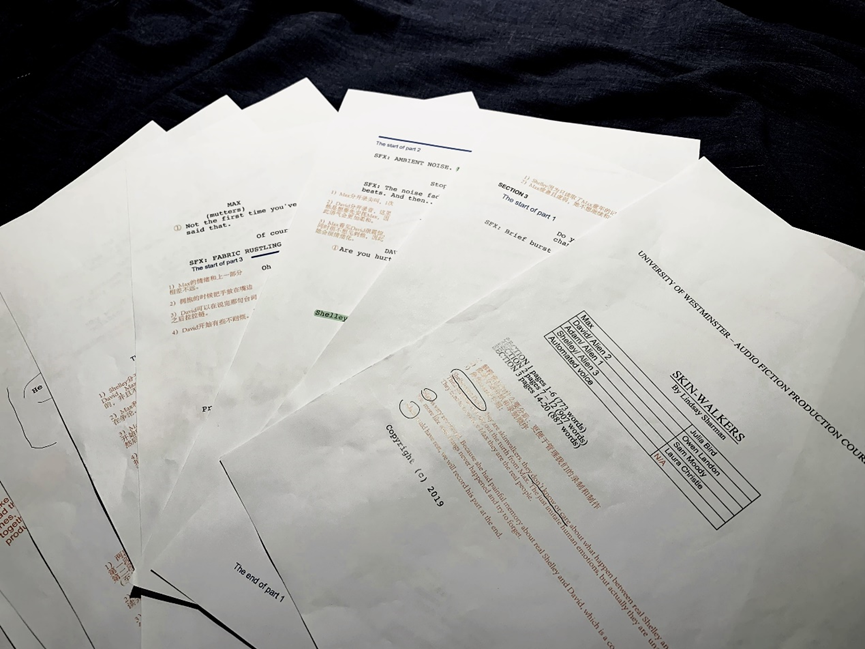
A few days before the recording, I divided the script into six parts in order to help our production coordinator with a better time management plan. This was also to better manage our post-production work. Therefore, after the initial introductions with the actors first I explained to them my plan for the recording of each part. The process in my plan was that firstly, I will tell the actors which part we are going to start recording now and tell them some of the key points of the segment. Then, after recording a test track, I would tell the actor to wait and listen back to see if the volume levels and the sound channel of the different actors are appropriate, if the mood of the line matches our understanding of the character, prompt them to adjust if there is a problem, and then continue recording if everything is fine. The production coordinator would record which one we think works best on the spot.
Looking back at the recording process, everything went smoothly and according to my plan. The actors were very professional and they understood my instructions very rapidly. And the script of instructions that I had prepared in advance came in useful as it allowed me to always know what I was going to do next and what effect I wanted to achieve.
To be honest, I think there is a certain amount of pressure to experience being a director for the first time. Because at the time I felt that when faced with different suggestions from the casts or other crew members, the director needed to make what he thought was the right decision at the moment as fast as possible. The director also needs to pay attention to the quality of the recording, the sound effects, and the performance of the actors, and to give timely advice and instructions that the actors and other staff can understand well.
If I do get the chance to go into a studio in the future, maybe I will also go and familiarise myself with the studio equipment before recording, for example, to get a good idea of the sound difference between different microphones and different recording environments. During this time, I was being unsure of how many actors would be suitable for one microphone and thought that if there were too many people and we needed to record them together, maybe it would be better to have one of the actors go into another room to record. But when Jeremy reminded me of this, I immediately realised that if they are recorded in a different location, the voice will sound different, and if the dialogue takes place in the same scene, it's obvious that this method of recording will not work.
All in all, I would regard this recording experience as a very fresh and precious one. Because of the circumstances, I had to calm myself down, and make an immediate response and decisive decision. More importantly, it gave me the first insight into the work as an audio drama director.


Comments